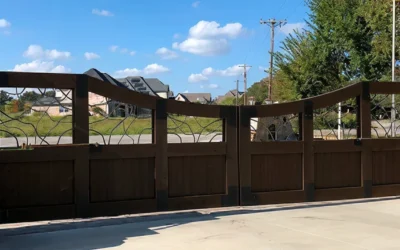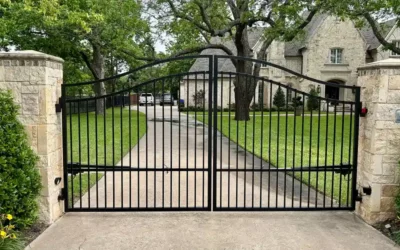
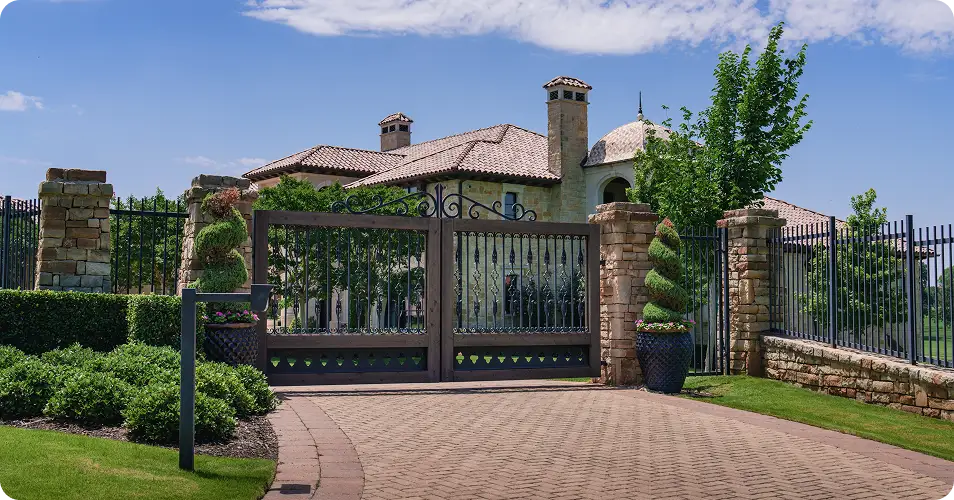
A custom driveway gate is more than an attractive entrance. It is a complete system that combines structural design, automation, electrical planning, and expert installation. When designed correctly, it enhances your property’s security, curb appeal, and everyday convenience while providing reliable performance for years.
Many homeowners begin by choosing a gate design. In our experience, the most successful custom driveway gates in Dallas are designed around the property first. Factors such as driveway slope, available space, power availability, gate weight, wind load, and access preferences all influence how the gate is engineered, installed, and performs over time.
For more than 40 years, Lambert’s Ironworks has designed, fabricated, and installed custom driveway gates throughout the Dallas-Fort Worth area. With more than 19,800 gates crafted and installed, we’ve found that long-term performance comes down to thoughtful planning long before fabrication begins.
Whether you’re building a new home or upgrading an existing entrance, here are ten things every homeowner should consider before installing a custom driveway gate.
1. Design Your Driveway Gate Around Your Property—Not Just the Style You Like
One of the biggest misconceptions about driveway gates is that the process starts with choosing a design. In reality, every successful gate starts with the property.
Before selecting a style, consider:
- Driveway width
- Property slope and grade
- Available space for the gate to operate
- Existing columns or masonry
- Vehicle clearance
- The architectural style of the home
- How frequently the gate will be used
These factors determine much more than appearance. They influence the type of gate that will work best, how it will be supported, what type of operator should be used, and how the entire system should be installed.
For example, a sloped driveway doesn’t necessarily prevent a swing gate, but it can significantly influence the design. In many cases, the slope influences hinge placement, gate configuration, and the amount of ground clearance required for the gate to operate properly.
At Lambert’s Ironworks, every gate is designed specifically for the property. Whether you have inspiration photos, architectural plans, or a custom design in mind, we help create a gate that complements your home while delivering reliable long-term performance.
2. Choosing the Right Gate Configuration Is Just as Important as Choosing the Design
The style of driveway gate you choose impacts both appearance and functionality. The right option depends on your property layout, available space, and how you plan to use the entrance.
Swing Gates
Swing gates remain the most common choice for residential properties and can be designed as either single-swing or double-swing gates.
They require adequate space to open and close, and the driveway grade must be considered to ensure the gate has enough clearance throughout its travel.
Sliding Gates
Sliding gates are often the better choice for properties with limited swing clearance or significant driveway slopes.
Unlike swing gates, they travel parallel to the fence line and require enough space alongside the driveway for the gate to slide open. They also require proper track alignment, electrical planning, and operator placement to ensure smooth, reliable operation.
Every property is different. Selecting the proper gate configuration early in the design process helps avoid costly changes later and ensures the gate performs as intended for years to come.
3. A Driveway Gate Should Be Engineered to Last
A custom driveway gate is more than ornamental iron—it’s a structural system. The size, weight, and design of the gate all influence how it performs over time.
When designing a gate, it’s important to consider:
- Gate size and weight
- Expected frequency of daily use
- Future serviceability
- Structural framing
- Wind load
- Post and foundation design
- The architectural style of the home
A gate that’s built without these factors in mind may still look great on day one, but it can become difficult to operate or require unnecessary repairs as it ages.
At Lambert’s Ironworks, every gate is custom fabricated for the specific application. We design each gate to complement the property’s architecture while providing the strength and durability needed for years of reliable operation.
4. Plan Power and Automation Before Installation Begins
Automation should never be treated as an afterthought. Planning for power, conduit, and operator placement early in the project helps avoid unnecessary modifications later and results in a cleaner installation.
Before installation, homeowners should consider:
- Whether electric or solar power is the better option
- Conduit placement before concrete is poured
- Operator location
- Gate size and weight
- Access preferences
- Future serviceability
- Expected frequency of use
A gate operator should be properly matched not only to the gate’s size and weight, but also to how frequently it will be used. Selecting a reliable operator backed by a strong manufacturer warranty can help improve long-term performance and reduce future maintenance.
Many homeowners also choose to incorporate features such as:
- Remote controls
- Keypads
- Smartphone access
- Exit loops
- Vehicle detection
- Safety devices
Planning these components together allows the gate, operator, and access controls to function as one complete system.
At Lambert’s Ironworks, automation is integrated into the design process from the beginning to help ensure reliable operation and long-term performance.
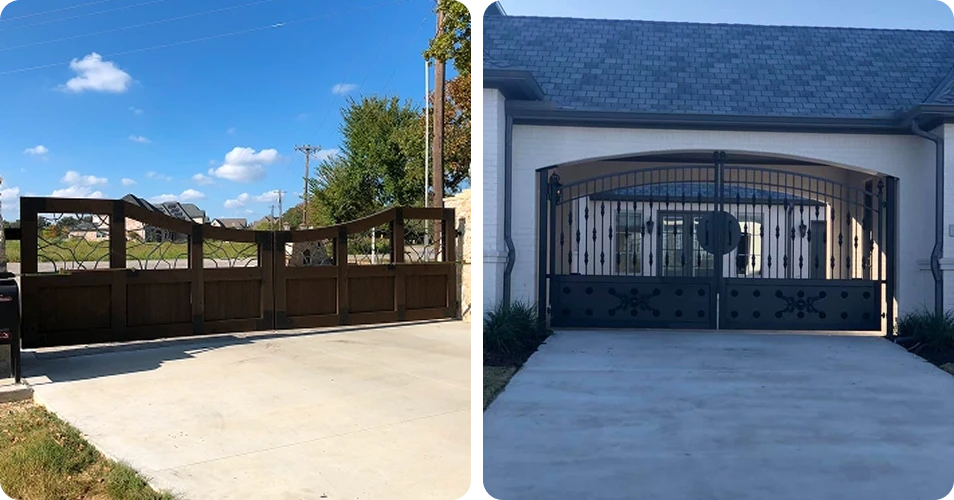
5. Precision Installation Is Just as Important as Good Design
Even the best-designed driveway gate will only perform as well as it’s installed.
Proper installation affects:
- Gate alignment
- Operator performance
- Smooth operation
- Long-term reliability
- Overall safety
For sliding gates, precise track alignment is critical. For swing gates, proper hinge placement, operator setup, and limit adjustments help ensure smooth operation while reducing unnecessary wear on the system.
Small installation errors can lead to premature maintenance issues, increased wear, and inconsistent operation over time.
Even minor alignment issues during installation can place unnecessary stress on the hinges, operator, and other components over time.
Because Lambert’s Ironworks designs, fabricates, and installs every gate in-house, our team maintains quality throughout the entire process—from the initial measurements to final testing and adjustment.
6. Think Beyond the Gate—Design the Entire Entrance
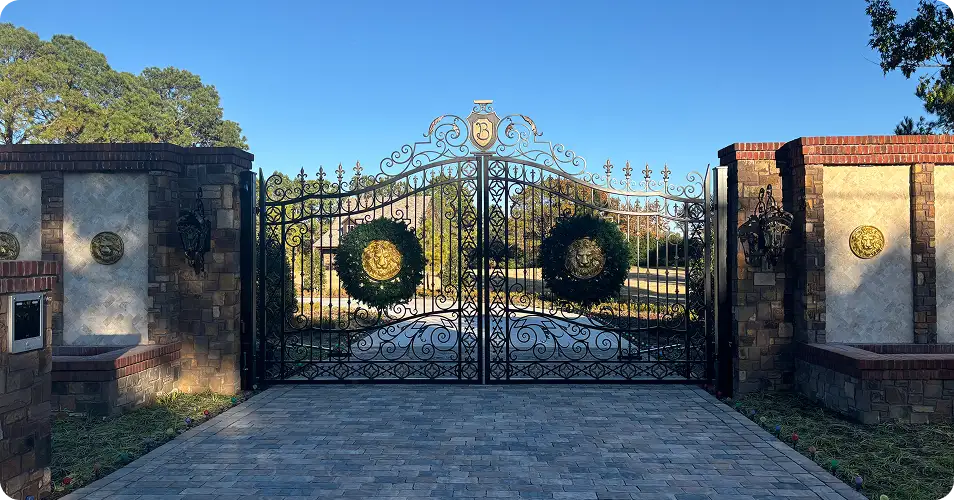
A custom driveway gate should feel like a natural extension of your property, not an afterthought. The most successful projects consider the entire entrance, from the gate itself to the surrounding architecture and landscape.
When designing a custom gate, consider how it will complement:
- Stone columns or masonry
- Ornamental fencing
- Landscaping
- The architectural style of your home
- Driveway layout
A traditional wrought iron gate may be the perfect fit for one home, while a clean, contemporary design may better complement another. The goal isn’t simply to control access—it’s to create an entrance that enhances the overall appearance and value of your property.
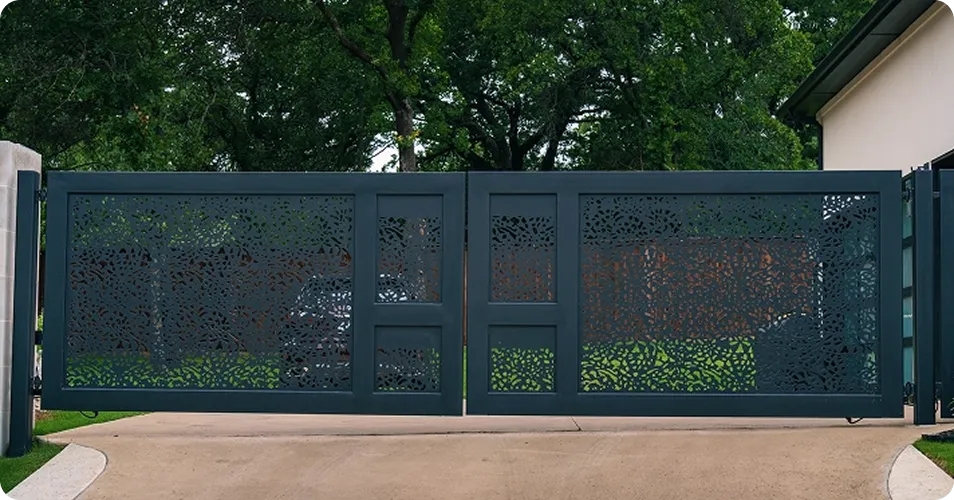
7. Custom Gates Are Designed for Your Property—Not Adapted to It
Every property is different. That’s why custom driveway gates offer advantages that prefabricated gates simply can’t match.
Custom Driveway Gates
- Designed specifically for your property
- Built to accommodate your driveway dimensions and layout
- Can integrate with existing columns, fencing, and architecture
- Engineered for the gate’s size, weight, and intended use
- Greater flexibility in style, materials, and automation
Prefabricated Gates
- Limited standard sizes
- Fewer design options
- Often require the property to adapt to the gate
- Less flexibility for unique entrances or architectural details
Custom fabrication is especially valuable for properties with sloped driveways, wide entrances, existing masonry, or homeowners looking for a truly one-of-a-kind design. Rather than forcing a standard product to fit, the gate is built around the property from the start.
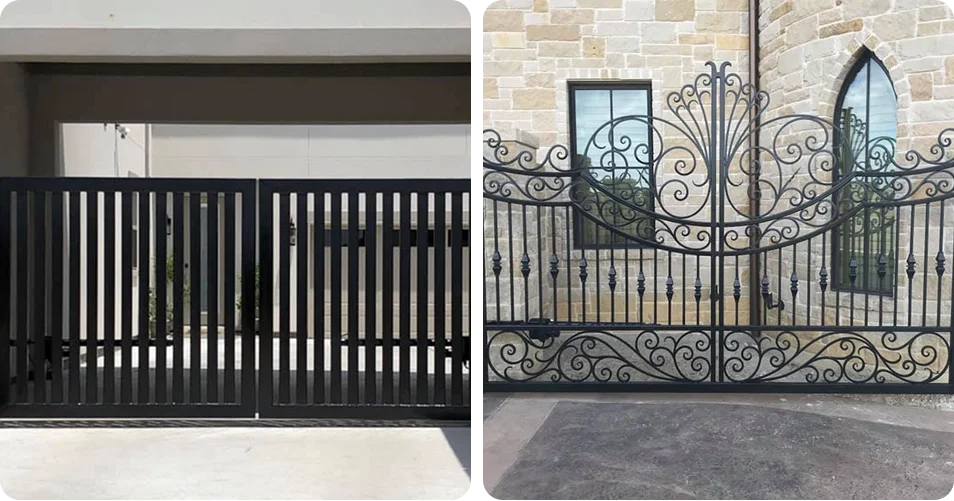
8. Choose a Company That Designs, Fabricates, and Installs the Entire System
A custom driveway gate involves much more than fabrication. It requires careful planning, structural design, automation, electrical coordination, and precision installation.
When evaluating a gate company, consider:
- Years of experience
- Custom fabrication capabilities
- Experience with automated gate systems
- Quality of completed projects
- Whether the company manages the project from design through installation
Working with one company throughout the process helps ensure every component is designed to work together—from the gate and supporting structure to the operator and access controls.
For more than 40 years, Lambert’s Ironworks has designed, fabricated, and installed custom driveway gates throughout the Dallas-Fort Worth area. With more than 19,800 gates crafted and installed, we’ve developed a process that prioritizes long-term reliability, quality craftsmanship, and attention to detail from the initial design through final installation.
9. Planning Ahead Helps Avoid Costly Mistakes
Many of the most common driveway gate problems can be avoided long before fabrication begins. Proper planning helps ensure the finished gate not only looks great but also operates reliably for years to come.
Some of the most common mistakes homeowners make include:
Choosing a Design Before Evaluating the Property
A beautiful gate still needs to work with your driveway layout, slope, and available space.
Waiting Too Long to Plan Power and Automation
Planning for conduit, electrical service, and operator placement early can help avoid unnecessary modifications and additional costs later.
Focusing Only on the Gate
The gate is only one part of the system. Posts, foundations, automation, and access controls all play an important role in long-term performance.
Underestimating the Importance of the Gate Operator
Homeowners often focus on the appearance of the gate itself, but the operator is one of the hardest-working components of the system. Choosing an operator that’s properly matched to the gate and expected daily use can improve long-term reliability and performance.
Choosing Based Only on Initial Cost
A lower upfront price may not provide the same level of engineering, craftsmanship, or reliability. Investing in quality design and installation often reduces maintenance and repairs over the life of the gate.
Thoughtful planning from the beginning helps create a driveway gate that performs as well as it looks.
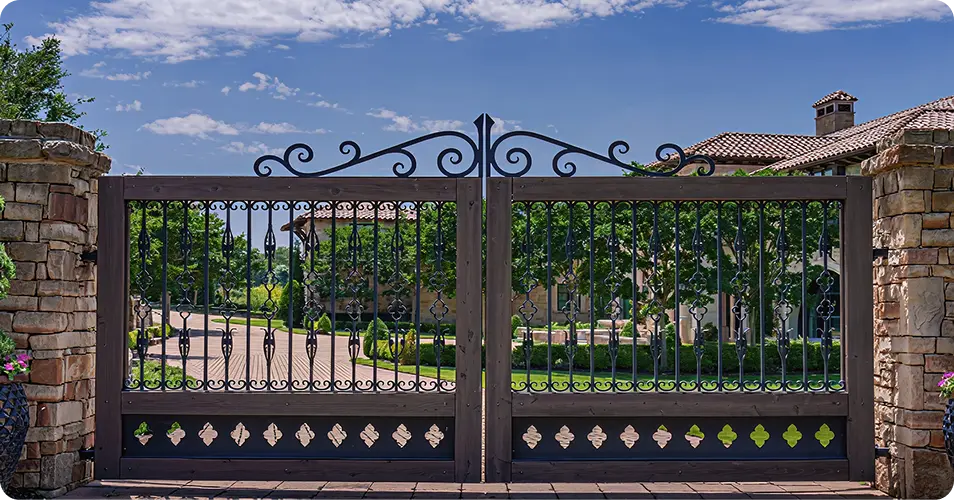
10. A Great Driveway Gate Is Designed as a Complete System
A custom driveway gate is one of the first things people notice about your home, but its value goes far beyond appearance. When properly designed, it provides security, convenience, reliability, and an entrance that complements your property’s architecture.
Every successful project starts with understanding the property and designing each component to work together—from the gate and supporting structure to the operator, power source, and access controls.
For more than 40 years, Lambert’s Ironworks has designed, fabricated, and installed custom driveway gates throughout the Dallas-Fort Worth area. With more than 19,800 gates crafted and installed, we’ve learned that long-term performance begins with thoughtful planning, quality craftsmanship, and expert installation.
Whether you’re building a new home or replacing an existing entrance, investing in the right design today helps ensure your gate will perform reliably for years to come.
Frequently Asked Questions
How much do custom driveway gates cost in Dallas?
The cost of a custom driveway gate depends on several factors, including the width of the opening, gate design, materials, automation, access controls, and installation requirements. Existing columns, electrical work, and site conditions can also affect the overall investment.
Because every property is different, the best way to determine pricing is through a consultation and site evaluation.
How long do custom iron driveway gates last?
A well-designed and properly installed iron driveway gate can provide decades of reliable service with routine maintenance.
Long-term performance depends on several factors, including:
- Quality of the gate’s structural design
- Protective finish
- Proper installation
- Operator selection
- Routine maintenance
A gate that is engineered, fabricated, and installed correctly will typically require fewer repairs and continue operating reliably for many years.
Are automated driveway gates worth installing?
Automated driveway gates can provide added convenience, security, and controlled access. They are especially useful for homeowners who use their driveway entrance frequently or want easier access to their property.
The key is selecting an operator that’s properly matched to the gate’s size, weight, and expected frequency of use, while incorporating appropriate safety devices.
Should I choose an electric or solar gate operator?
In most cases, we recommend electric gate operators when power is available. They typically provide more consistent performance, require less ongoing maintenance, and are better suited for frequent daily use.
Solar gate operators can be an excellent solution when running electrical service isn’t practical. However, they rely on adequate sunlight, battery condition, and periodic maintenance to continue operating reliably.
The right choice depends on your property’s layout, available utilities, and how the gate will be used. During the design process, we help homeowners determine which option makes the most sense for their specific application.
Why choose a custom gate instead of a standard driveway gate?
A custom driveway gate is designed specifically for your property rather than adapted to fit it.
Custom fabrication allows the gate to match your home’s architecture, accommodate unique driveway dimensions, integrate with existing columns or fencing, and support the appropriate automation system.
The result is a gate that not only looks better but is also designed to provide reliable long-term performance.
Should I install conduit before my driveway is poured?
Yes. If you’re building a new home or replacing your driveway, planning for conduit before the concrete is poured can save time, reduce installation costs, and eliminate the need for future core drilling. Early coordination also allows power, operator wiring, safety devices, and access controls to be integrated more cleanly into the finished project.