Planning ahead can make a custom driveway gate project significantly smoother. Gate location, finished grades, utilities, HOA requirements, automation, and site access can all affect the design and installation.
If you’re planning a custom driveway gate for your Dallas-Fort Worth property, here are the major items worth considering before your site visit and installation.
What “Preparing” Actually Means for a Custom Gate
Preparing for a custom gate differs from prepping for a prefab kit bolted into pre-dug holes. Lambert’s custom driveway gates are measured, engineered, and fabricated specifically for each property. That customization is exactly why preparation happens earlier and matters more than it would for an off-the-shelf option.
Before fabrication and installation, several factors may need to be coordinated, including accurate field measurements, utilities and site access, HOA or permitting requirements, and automation. Addressing these items early helps reduce avoidable changes and delays later in the project.
Step 1: Document Your Driveway and Site Conditions
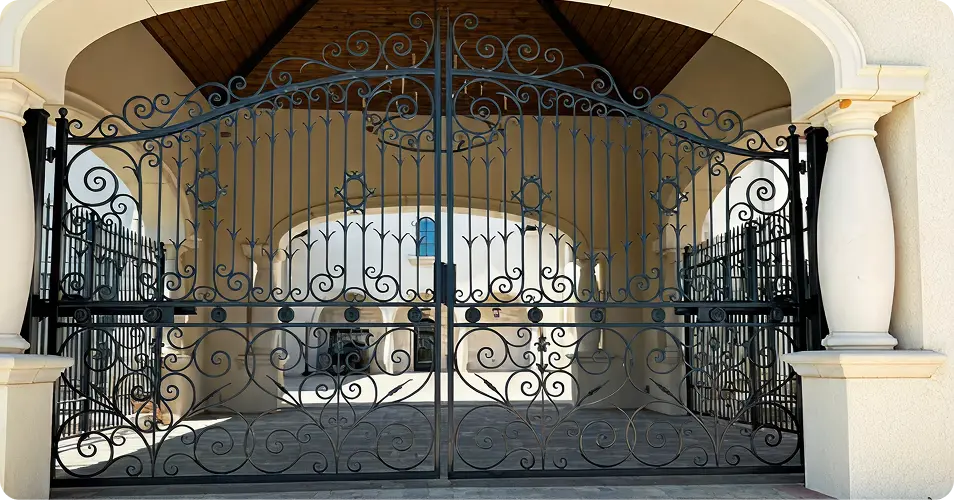
Before your site visit, consider where you want the gate located and note any obvious site conditions that may affect the design. A steep driveway can affect the type of gate we recommend, the direction it operates, and even where the gate should be located. Existing columns or walls, landscaping, available space, and the vehicle approach can also influence the final configuration.
Step 2: Know What’s Underground and Overhead
Existing utilities, irrigation, drainage, and overhead obstructions should be identified before installation work begins. Before excavation, underground utilities need to be properly located. Lambert’s coordinates the required 811 locate for our excavation work.¹
Homeowners should also let us know about private utilities, irrigation, drainage, or other privately installed lines near the gate area. Some private lines may not be identified through the standard 811 process and may require additional coordination.¹
Overhead conditions matter as well. Trees, utility lines, structures, and other obstructions can affect gate placement, movement, and equipment access. Identifying these conditions early helps Lambert’s plan the installation around the property and avoid unnecessary surprises once work begins.
Step 3: Check HOA Rules, Setbacks, and Permit Requirements
HOA and permitting requirements can vary by property and municipality. If your neighborhood has an HOA or architectural review process, check the applicable requirements early in the project. Gate design, materials, height, location, or other visible features may be subject to approval.
Local permitting and setback requirements can also affect the project, particularly depending on the gate location, electrical work, and scope of installation. Requirements vary across Dallas-Fort Worth, so they should be confirmed for the specific property rather than assumed.
Lambert’s can provide drawings and project information when needed and assist with permitting coordination when requested. Electrical work and applicable electrical permitting within that scope should be handled by a properly licensed electrical contractor.²
Step 4: Decide Gate Style and Swing Direction Early
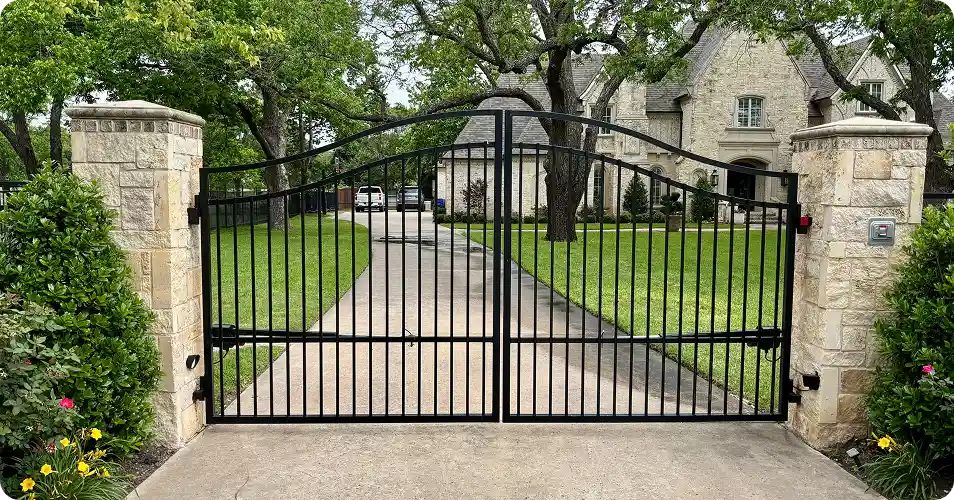
Your driveway’s layout, available space, and grade can influence which gate configuration makes the most sense. Three common configurations include:
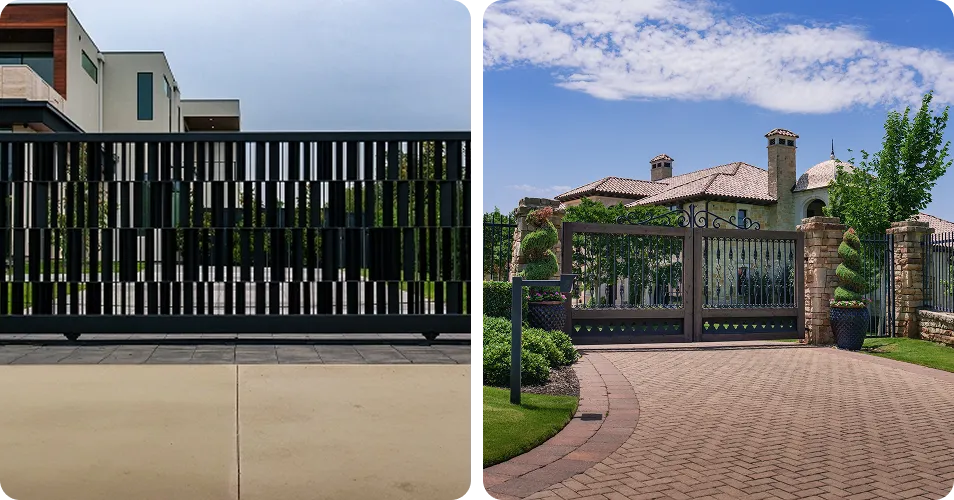
- Single-swing gates use one gate leaf and require sufficient space for the full gate to travel through its swing.
- Double-swing gates divide the opening between two leaves, reducing the swing radius required for each leaf.
- Sliding gates move laterally rather than swinging into or away from the driveway and require adequate space alongside the opening.
Gate configuration also depends on the proportions and architecture of the entrance. Lambert’s generally doesn’t recommend a true double-swing gate for openings narrower than approximately 12 feet, although every property is evaluated individually. Gate weight, available operating space, driveway slope, surrounding architecture, and the desired appearance all factor into the final recommendation.
What type of driveway gate is best for a home often comes down to the conditions of the property as much as the appearance of the gate. Lambert’s evaluates these factors during the site visit and recommends a configuration based on the complete entrance.
For a deeper look at these considerations, our 10 things to know before installing custom driveway gates in Dallas covers several of the same tradeoffs in more detail.
Step 5: Plan for Power and Automation Before Fabrication Begins
If you want an automated driveway gate, electrical and access-control requirements should be considered early in the project. The gate configuration, operator, available power, and desired access features can affect the overall system design and infrastructure requirements.
Lambert’s generally recommends hardwired electric when reliable electrical service can reasonably be provided. Solar can be a useful alternative when bringing power to the gate is impractical. Access options may include remote controls, keypads, vehicle detection, smartphone access, intercoms, cameras, or other access-control equipment depending on the property and system.
If electrical service is required, coordinating power and conduit before finished paving or landscaping can help avoid unnecessary rework later.
For a sense of how gate design and automation affect the overall project cost, see our guide to custom driveway gate costs in Dallas.
Step 6: Clear and Prep the Site for Crew Access
Before installation, make sure the site conditions required for the gate are actually ready. For automated gates, one of the most common issues is electrical service not being available at the gate when the operator is ready to be installed. Required power and conduit should be completed beforehand when applicable.
Finished grades should also be established, and the installation area should be accessible to Lambert’s crews without interference from other trades, vehicles, materials, or equipment. If site conditions have changed since Lambert’s took field measurements, let us know before the installation date.
If irrigation or private utilities are located near the installation area, let Lambert’s know before work begins.
Step 7: Set Realistic Expectations for Timeline and Weather
Because each Lambert’s gate is custom-fabricated after the design is approved, project timelines vary based on design complexity, fabrication requirements, site conditions, and other project-specific factors. Weather can also affect scheduled field work.
Our post on what to expect once installation day arrives covers the on-site process in more detail and can help you understand what to expect as installation approaches.
Pre-Installation Checklist
Before your project moves toward installation, confirm:
- Gate location and site conditions have been reviewed
- Required utility locating has been coordinated before excavation
- HOA or architectural approval has been addressed, if applicable
- Applicable permitting responsibilities have been confirmed
- Automation and access-control requirements have been discussed
- Required electrical service and conduit have been coordinated, if applicable
- The installation area is accessible and clear of vehicles and other obstructions
- Lambert’s has been informed of any site changes since field measurements were taken
Preparing these items early helps reduce avoidable changes and gives our team the information needed to plan the gate around your property. Lambert’s Ironworks handles design, fabrication, and installation in-house and has crafted and installed more than 19,800 gates throughout Dallas-Fort Worth.
Whether you’re still considering gate options or preparing for installation, our team can evaluate the property and help determine the right next steps.
Frequently Asked Questions
Can I install a custom driveway gate myself?
Custom driveway gates need to be designed and installed around the specific opening, grade, gate weight, post requirements, and intended operation. Automated systems also introduce electrical, operator, access-control, and safety requirements. For a custom gate, professional installation helps ensure the complete system is designed and installed for the property.
How far off the ground should a driveway gate be?
Lambert’s typically designs swing gates with approximately 3.75 inches of clearance from finished grade to the bottom of the bottom rail. This provides clearance for the gate’s movement and components such as track wheels where applicable. For sliding gates, our typical clearance is approximately 2 inches.
These are general standards, not fixed dimensions for every property. Driveway slope, finished grade, drainage, gate configuration, and other site conditions can require different clearances. Lambert’s evaluates these conditions during field measurements and designs the gate accordingly.
Do I need HOA approval or a permit before installing a driveway gate?
Requirements vary by property, HOA, municipality, and project scope. If your property is subject to architectural or HOA requirements, check those requirements early in the project. Applicable permitting responsibilities should also be identified before installation so they can be incorporated into the project schedule.
How long does a custom driveway gate take from first visit to finished installation?
Timing varies by project. For many custom gates, Lambert’s first sets the posts and then takes final field measurements so the gate can be fabricated around the actual installed conditions. Once those final measurements are taken, fabrication and installation typically take several weeks, depending on the gate design, finish, automation, production schedule, and site readiness.
Does gate style affect ongoing maintenance?
Yes. Different gate configurations have different maintenance considerations. Sliding gate systems may require periodic attention to the path or track, depending on the system, while swing gates rely on hinges, posts, and other moving components. Regular inspection, cleaning, lubrication, and attention to finish damage can help keep the gate operating properly.
Can I add automation to my gate after the initial installation instead of during it?
In many cases, automation can be added later, but it is better to plan for it when the gate is originally designed. Operator requirements, gate configuration, electrical service, conduit, access controls, and other infrastructure can be considered from the beginning, making a future automation upgrade easier to accommodate.
If you’re considering automation, see our Electric vs. Solar Gate Operators guide for more information.