Planning electrical and conduit early can prevent some of the most avoidable problems on an automated driveway gate project. If conduit is missing, undersized, or installed in the wrong location before concrete or paving is completed, correcting it later can require additional trenching, boring, or cutting into finished work.
This is especially important during new home construction. Gate location, operator placement, electrical service, access controls, and driveway gate conduit should be coordinated before the driveway and surrounding improvements are finished. This guide covers the major considerations to discuss with your gate contractor and licensed electrician before work begins.
What Needs to Run Through Conduit on a Gate System
An automated driveway gate may require wiring for the gate operator, safety devices, keypads, intercoms, cameras, vehicle detection, and other access-control equipment.
Line-voltage power and low-voltage control or communication wiring have different requirements and should be planned accordingly. The exact number, size, and routing of conduit depends on the gate system, operator, accessories, electrical design, and applicable code requirements.
This is why Lambert’s recommends identifying the gate and access-control requirements early, then coordinating the electrical infrastructure with a licensed electrician before paving or other finished work is completed.
How Deep Does Conduit Need to Be Under a Driveway?
Conduit burial depth depends on the circuit, wiring method, location, and applicable electrical code. Under the 2026 National Electrical Code, underground installations beneath one- and two-family residential driveways generally require 18 inches of cover, with certain qualifying 120-volt, GFCI-protected residential branch circuits permitted at 12 inches. Other roadway, driveway, and parking applications can require 24 inches.¹
Those numbers should be treated as planning guidance, not a substitute for an electrical design. The licensed electrician and local authority having jurisdiction should confirm the required wiring method, burial depth, permitting, and inspection requirements for the specific project before the trench is closed.
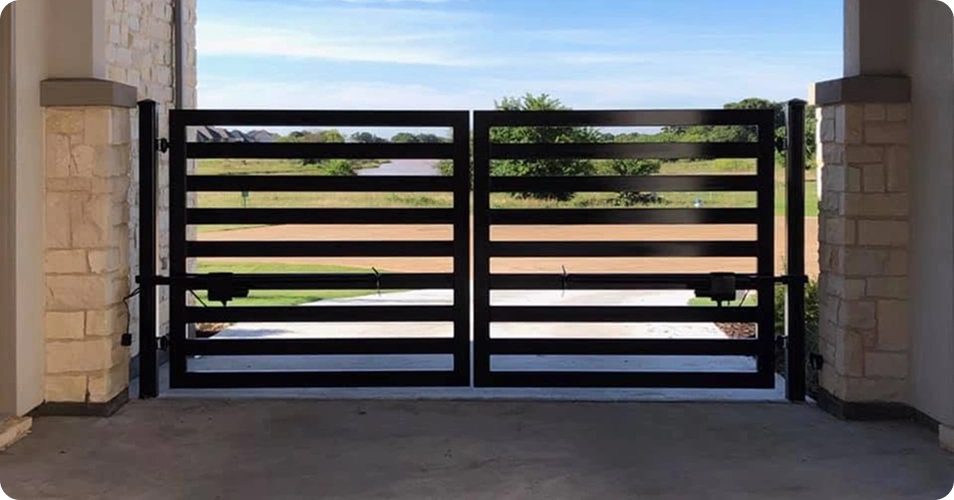
Choosing the Best Conduit for Driveway Gate Wiring
Schedule 40 PVC conduit is commonly used for underground electrical runs, while Schedule 80 PVC provides additional protection in locations where the conduit may be exposed to physical damage.² The appropriate conduit type, size, and routing should ultimately be determined by the electrical requirements of the gate system and the licensed electrician.
When practical, it can also make sense to plan additional conduit capacity for future access-control equipment such as cameras, intercoms, or other devices. Installing that infrastructure before paving is typically much easier than adding it after the project is finished.
Pull strings should also be installed where appropriate so wiring can be pulled through the conduit later.
Low Voltage vs. Line Voltage: Why It Matters
Automated gate systems can require both line-voltage power and low-voltage wiring for components such as keypads, intercoms, safety devices, vehicle detection, and other access controls. These systems have different wiring and installation requirements, which should be considered when planning conduit.
Distance matters as well. Longer wire runs can create voltage drop, and wire size should be selected based on the equipment, distance, electrical load, and manufacturer requirements. The licensed electrician should determine the appropriate line-voltage wiring, while Lambert’s can identify the operator, safety devices, and access-control equipment the system needs.
Planning those requirements together before conduit is installed helps avoid undersized or incorrectly routed infrastructure later.
Sleeve Before You Pave: Avoid Expensive Rework
Conduit should be planned before the driveway, paving, and other finished surfaces are completed whenever possible. Adding electrical or low-voltage infrastructure afterward may require additional trenching, directional boring, saw-cutting, or patching that could have been avoided with earlier coordination.
This is also why custom driveway gate design and electrical planning should happen together. Lambert’s can establish the gate configuration, post locations, operator placement, and access-control requirements early enough for the builder, homeowner, and licensed electrician to plan the necessary infrastructure before finished work is completed.
For new construction, that coordination is one of the simplest ways to avoid unnecessary rework later.
Permits and Working With a Licensed Electrician
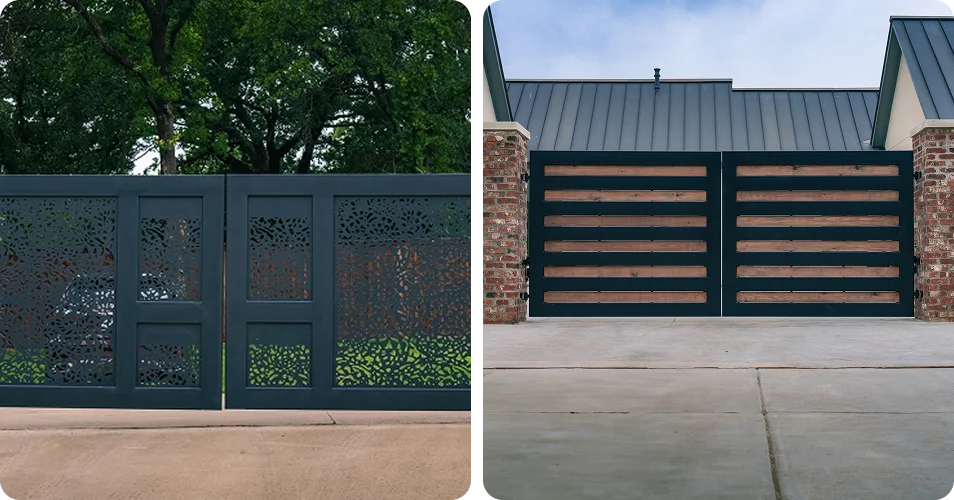
Hardwired gate operators require electrical infrastructure that should be installed by a properly licensed electrical contractor in accordance with applicable code and permitting requirements.³ Requirements vary by municipality and project scope, so the electrician should confirm the required circuit, wiring, conduit, protection, permits, and inspections for the specific project.
Lambert’s coordinates the gate side of that planning by identifying the operator location and the power and access-control requirements for the system. Once the appropriate electrical service is available, our team can install and configure the gate operator, battery backup, safety devices, and access-control components within our scope.
On new construction, involving both the gate contractor and electrician before paving is completed helps keep those responsibilities clear and the project moving in the right sequence.
Our guide to the custom driveway gate installation process explains what happens as the project moves from site planning through installation.
No Power Near the Gate? Consider Solar
When bringing electrical service to the gate is impractical, a properly designed solar gate operator can be a good alternative. This is particularly useful for remote entrances, acreage properties, or existing sites where running new electrical service would require significant disruption.
Solar-system design should account for the gate, expected daily cycles, access-control equipment, available sunlight, battery capacity, and solar-panel sizing.⁴ For that reason, solar should be evaluated as part of the complete gate system rather than simply as a way to avoid running electrical service.
For properties where reliable electrical service can reasonably be provided, Lambert’s generally recommends hardwired electric power.
A Pre-Pour Electrical Checklist
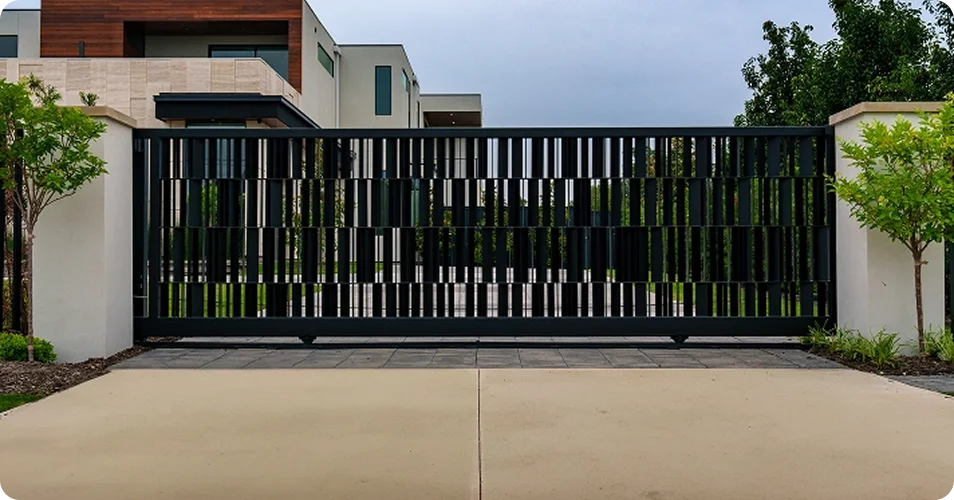
Walk through this list with whoever is coordinating the trenching before any grading starts. It pairs well with our broader list of 10 things to know before installing a custom driveway gate in Dallas, since gate placement and paving decisions affect where every conduit run ends up.
Before grading, paving, or other finished work is completed, coordinate the following with your gate contractor, builder, and licensed electrician:
- Confirm the gate configuration and operator location.
- Identify the planned power source and approximate distance from the electrical service.
- Identify access-control and safety equipment such as keypads, intercoms, cameras, photo eyes, and vehicle detection.
- Plan conduit routes and termination locations based on the gate and electrical requirements.
- Consider future needs. When practical, additional conduit capacity can make future access-control upgrades easier.
- Confirm conduit type, size, burial depth, wiring, and required separation with the licensed electrician.
- Confirm applicable permits and inspections before trenches are covered or finished surfaces are installed.
How Lambert’s Plans for Electrical and Automation
With more than 40 years of experience and 19,800+ gates crafted and installed, Lambert’s understands that automation needs to be considered before the gate reaches the job site.
Single-swing, double-swing, and sliding gates can require different operator locations, post configurations, clearances, and infrastructure. Because Lambert’s handles design, fabrication, and installation in-house, we can identify those requirements early and provide the information the builder, homeowner, and electrician need to coordinate their respective scopes.
On new construction, the goal is simple: plan the gate before the surrounding work makes changes expensive.
That means considering gate location, operator placement, electrical service, conduit, safety equipment, and access controls as one system—not as separate decisions made at the end of the project.
Frequently Asked Questions
Do I need a permit to run electrical to a gate, and who pulls it?
Requirements vary by municipality and project scope. For hardwired gate systems, a licensed electrical contractor should handle the electrical work and applicable electrical permitting within their scope. Lambert’s can provide gate drawings and project information and assist with permitting when requested.³
Can gate operator wiring share a circuit with something else, like landscape lighting?
The electrical requirements should be determined based on the gate operator, manufacturer specifications, other loads, and applicable electrical code. A licensed electrician should determine the appropriate circuit and wiring for the specific gate system.
Do I need conduit run to both gate posts, or just one side?
It depends on the gate configuration and equipment. A gate system may require conduit between operator locations or to safety devices, keypads, vehicle detection, and other access-control equipment on either side of the driveway. Lambert’s can identify the equipment and required locations so the conduit layout can be coordinated before paving.
What happens to an electric driveway gate during a power outage?
Lambert’s hardwired gate systems typically include battery backup, which can provide temporary operation during a power outage. Available operating time depends on the operator, battery condition, gate usage, and connected equipment. Many operators also provide a manual-release method if needed.
When should conduit for an automated driveway gate be installed?
On new construction, conduit should ideally be planned before the driveway, paving, and finished landscaping are completed. The gate configuration, operator location, access controls, and electrical requirements should be identified first so the builder and licensed electrician know where the necessary infrastructure needs to go.
What if the driveway is already poured and conduit was never installed?
There may still be options. Depending on the property, new electrical service may require trenching, directional boring, saw-cutting, or another routing method. In some situations, solar may also be worth evaluating. Lambert’s can assess the gate and site requirements so the homeowner and electrician can determine the most practical approach.