If you’re planning an automatic driveway gate, one of the first decisions is how the gate operator will be powered. Lambert’s installs both electric and solar gate operators, but we generally recommend hardwired electric power when it can reasonably be brought to the gate. It provides consistent power and is well suited for heavier gates, frequent operation, and more sophisticated access-control systems.
Solar is a useful alternative when bringing electrical service to the gate is impractical. The right choice depends on the gate, site conditions, electrical availability, expected use, and access-control requirements.
What’s the Real Difference Between Electric and Solar Gate Operators?
A hardwired electric gate system uses electrical service from the property to power the operator and maintain its battery backup. A solar gate operator relies on solar panels to recharge the batteries that power the system².
Both can operate an automatic driveway gate reliably when properly designed. The difference is that solar performance also depends on variables such as available sunlight, panel placement, battery capacity, gate usage, and accessory power demand¹. That’s why we generally prefer hardwired electric power when it is practical to provide it.
Getting the electric vs solar gate operator choice right saves you from a costly retrofit later.
How Electric Gate Operators Work (and Where They Excel)
Hardwired electric is our preferred solution when reliable electrical service can reasonably be brought to the gate. It provides consistent power without depending on sunlight and is particularly well suited for heavier gates, frequent operation, and systems with keypads, cameras, intercoms, or more sophisticated access controls.
Proper planning is important. A licensed electrical contractor should bring the appropriate power and conduit to the gate location and handle the electrical work and permitting within their scope.³ On new construction, this should ideally be coordinated before concrete, paving, and finished landscaping are completed. Doing that early can minimize additional trenching, cutting, and rework later.
Once the required power is available, Lambert’s installs and configures the gate operator, battery backup, safety devices, and gate-system components within our scope.
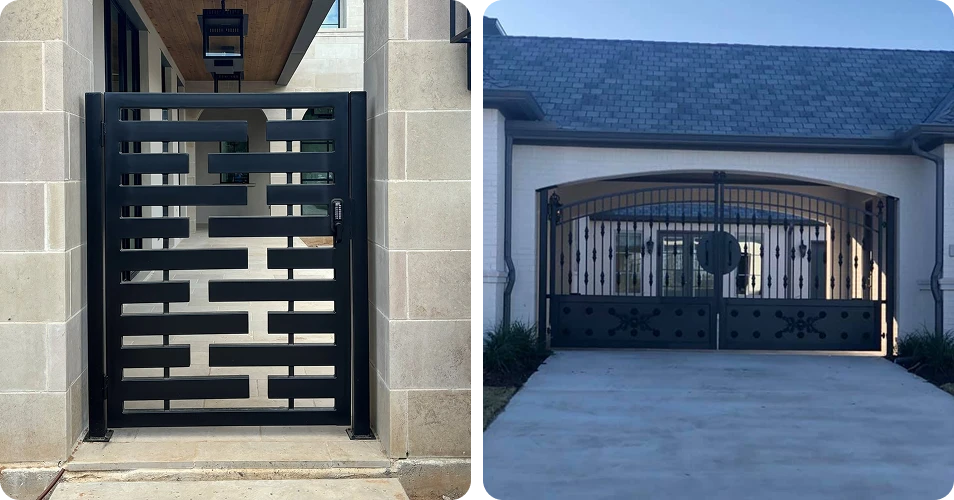
How Solar Gate Operators Work (and Where They Excel)
Solar gate operators make the most sense where bringing electrical service to the gate is impractical, such as remote entrances, acreage properties, or existing sites where running new power would require significant disruption.
A properly designed solar system can be very reliable, but it has more variables to account for. Gate size and resistance, expected daily cycles, access-control equipment, available sunlight, battery capacity, and solar-panel sizing all affect performance.¹
Panel placement and maintenance matter as well. Shade, dirt, dust, debris, and poor panel alignment can reduce the energy available to recharge the batteries. Solar panels should be positioned for appropriate sun exposure and kept reasonably clean.¹
For that reason, we view solar primarily as a solution for locations where hardwired power is impractical—not simply as a less expensive alternative to electric.
Electric vs. Solar: Cost, Power, and Reliability Compared
| Factor | Hardwired Electric | Solar |
|---|---|---|
| Power source | Property electrical service with battery backup | Solar panels charging batteries |
| Lambert’s recommendation | Preferred when power can reasonably be provided | Best when bringing power to the gate is impractical |
| Best fit | Most residential gates, heavier gates, frequent use, advanced access control | Remote entrances, acreage, difficult electrical access |
| Power consistency | Consistent grid power with battery backup | Dependent on proper solar sizing, sunlight and battery capacity |
| Outages | Battery backup provides temporary operation | Battery-based by design |
Technical power-system characteristics based on manufacturer guidance.¹,²
Gate operator cost depends on the operator, gate size and configuration, access controls, safety equipment, electrical requirements, and site conditions. Lambert’s residential gate operator installations generally start around $5,000, while heavier-duty or more complex systems can cost $10,000 or more. Commercial operators and sophisticated access-control systems can cost substantially more depending on the equipment and scope.
Solar should not automatically be viewed as the less expensive option. Likewise, hardwired electric does not necessarily require major trenching costs—particularly on new construction where electrical and conduit can be planned before the driveway and surrounding work are completed.
The better comparison is the total installed system required for the property, not the retail price of an operator purchased online.
Our cost breakdown for custom driveway gates in Dallas walks through what drives that range.
Texas Heat and Weather: What DFW Property Owners Should Know
North Texas weather matters with either system, but solar systems depend more heavily on battery condition and solar production.
High temperatures can accelerate battery aging, while periods of reduced solar production can affect how effectively the system recharges.⁴ Manufacturers recommend sizing solar systems around expected gate usage, accessories, available sunlight, and periods of reduced solar production rather than simply selecting a panel based on operator size.¹
Hardwired systems remove sunlight from that equation while still using battery backup during temporary power outages. That’s another reason we generally recommend electric power when it is practical.
How to Choose the Right Gate Operator for Your Property
Start with these questions:
- Can electrical service reasonably be brought to the gate? If yes, we generally recommend hardwired electric.
- Is this new construction? Coordinate gate location, power, and conduit before paving whenever possible.
- How large and heavy is the gate? Operator selection should be based on the actual gate and its operating requirements.
- How frequently will the gate operate? Daily cycle requirements affect operator and power-system selection.
- What access controls will the system support? Keypads, cameras, intercoms, loops, and other devices can increase power demand.
- If using solar, does the site have adequate sun exposure? Shade, panel orientation, weather, and battery capacity all matter.¹
There is no universal distance from the house where solar suddenly becomes the better choice. The decision should be based on the complete gate system and site conditions.
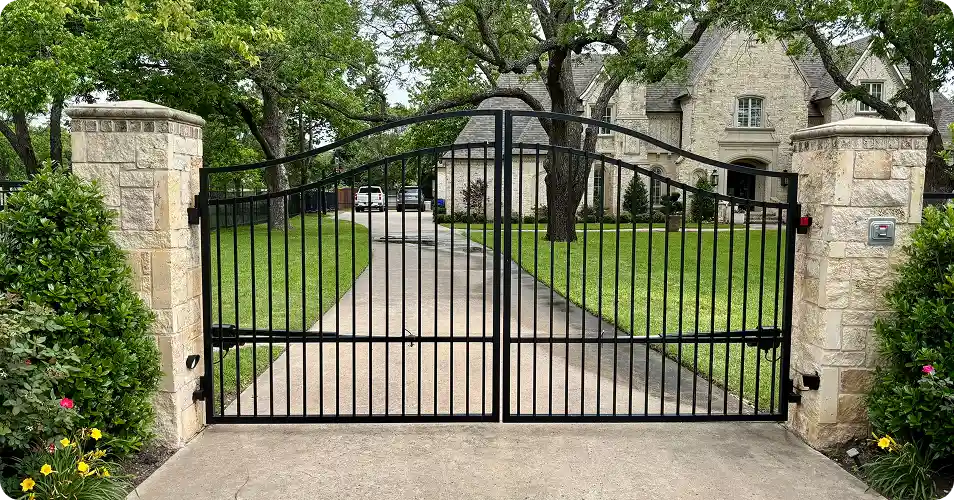
Why Gate Operator Choice Starts With the Gate Itself
An operator should be selected for the gate it actually has to move. Gate size, weight, configuration, resistance, expected usage, and access-control requirements all affect operator selection.
That’s why Lambert’s evaluates the gate and the site as one system rather than treating the operator as an accessory added at the end. We start with the custom gate design, evaluate the gate’s size, weight, configuration, operating requirements, and expected use, and then recommend the appropriate operator, power source, safety devices, and access controls.
In most applications, our preference is straightforward: use hardwired electric power when it can reasonably be provided, and use solar when getting reliable electrical service to the gate is impractical.
The goal isn’t simply to make the gate open. It’s to build a complete system that operates reliably day after day.
Frequently Asked Questions
Is a solar gate opener worth it if my gate is close to my house?
If reliable electrical service can reasonably be brought to the gate, we generally recommend a hardwired electric operator. Solar becomes more attractive when getting power to the gate is impractical or disproportionately disruptive.
How long do solar gate opener batteries last?
Battery life varies based on the battery, system design, temperature, usage, charging conditions, and maintenance. North Texas heat can accelerate battery aging, so batteries should be inspected and replaced based on their condition and the operator manufacturer’s recommendations.⁴
Do I need a permit for a gate operator in DFW?
Requirements vary by municipality and project scope. For hardwired systems, a licensed electrical contractor should handle the electrical work and applicable electrical permitting within their scope.³ Lambert’s can provide gate drawings and project information and assist with permitting when requested.
Can you convert an electric gate to solar, or the reverse?
Sometimes. Compatibility depends on the operator, controller, batteries, accessory load, and available power. The existing gate and operator should be evaluated before changing the power source.
Which is better for a heavy custom iron gate, electric or solar?
We generally recommend hardwired electric power for heavier custom gates when electrical service can reasonably be provided. A properly engineered solar system can still work, but gate weight, operating resistance, daily cycles, accessories, available sunlight, and battery capacity all need to be considered.