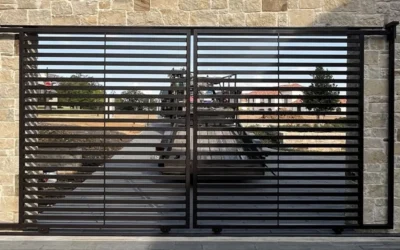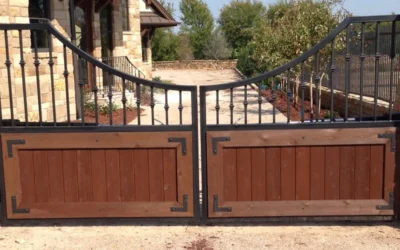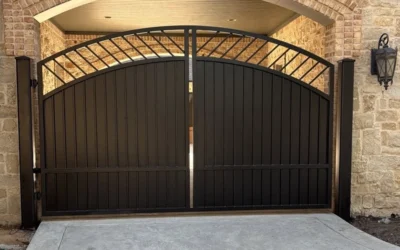
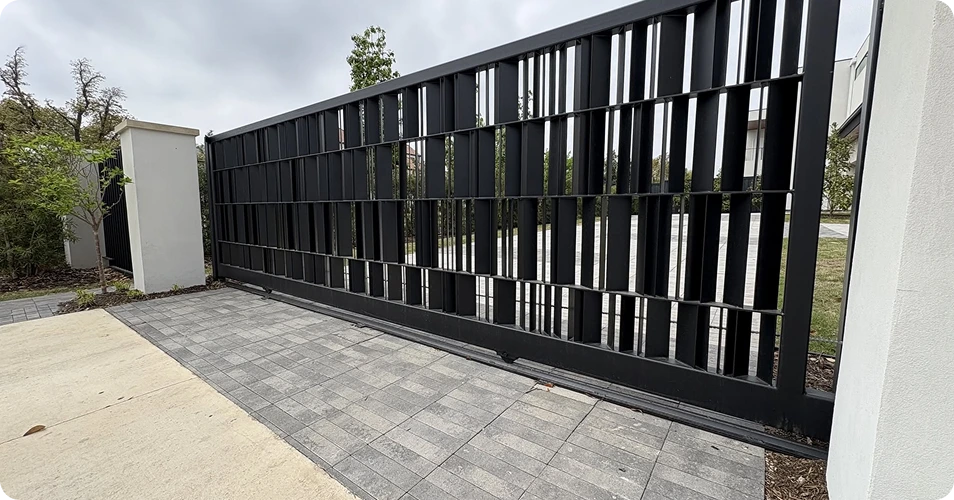
When an automatic gate stalls, reverses, or stops working, the operator usually gets the blame. The cause often traces back to decisions made before installation: how the gate and operator were matched, how the posts and foundations were built, when power and wiring were planned, and whether the safety devices were set up and tested.
This guide is for homeowners and builders planning a new custom or automatic driveway gate. It walks through the planning, structural, and installation decisions that help prevent problems later, with troubleshooting examples along the way, and what to ask for before you sign a quote. It draws on what our team at Lambert’s Ironworks has learned installing more than 19,800 gates across Dallas Fort Worth.
Why Do Automatic Gates Fail?
Automatic gates often run into trouble when the gate, operator, power, and site were planned as separate pieces. Common contributors include a heavy or misaligned gate that strains the operator, posts or foundations that move under load, late wiring that leaves weak connections, and misaligned safety sensors that cause false stops. Weather and wear then expose those weak points. No single component explains every failure, which is why the whole system is best planned together before construction starts.
Planning Mistakes That Set a Gate Up to Fail
Choosing the Gate and Operator Separately
An operator has to suit the gate’s size, weight, and how often it runs. When a homeowner buys a gate from one company and an opener from another, nobody owns that match. The operator ends up working harder than it should on every cycle.
Picture a wide iron double-swing gate paired with an opener picked from a catalog. It may work on day one, then start slowing, stalling, or reversing as hinges wear or posts shift. That’s why Lambert’s coordinates gate and operator requirements as part of the design, and we run compatibility checks on existing systems.
Not Coordinating With Other Contractors
A driveway gate touches concrete, masonry, electrical, landscaping, and sometimes access control or intercom work. If each trade works from a different plan, openings, columns, conduit, and grades can end up in the wrong place. Builders and homeowners can avoid rework by bringing the gate company in before the driveway, columns, and utilities are finalized, and by agreeing in writing who is responsible for each part of the scope.
Planning Power and Wiring Too Late
Operator placement and the power run should be settled before concrete is poured, one of the things to know before installing custom driveway gates that saves the most rework. Lambert’s coordinates the gate and operator requirements, including where the operator will sit and what power and control wiring it needs. The customer or builder typically arranges the electrical power and conduit through a licensed electrician, so that work should be scheduled early and built to the requirements of the chosen operator. When wiring comes last, it gets squeezed around finished pavement and masonry. Those rushed runs and connections are where moisture and loose terminals cause trouble later.
Solar operators can suit sites without practical wiring, but they depend on sunlight, battery condition, and upkeep. That trade-off belongs in the plan from the start.
Ignoring the Site
A gate that would work on a flat lot can fail on a sloped drive, a tight setback, or an entrance where sprinklers soak the posts every morning. Grade decides whether a swing gate clears, and constant water is hard on steel and electrical parts. We start every project with a full site evaluation so the terrain shapes the design before any metal is cut.
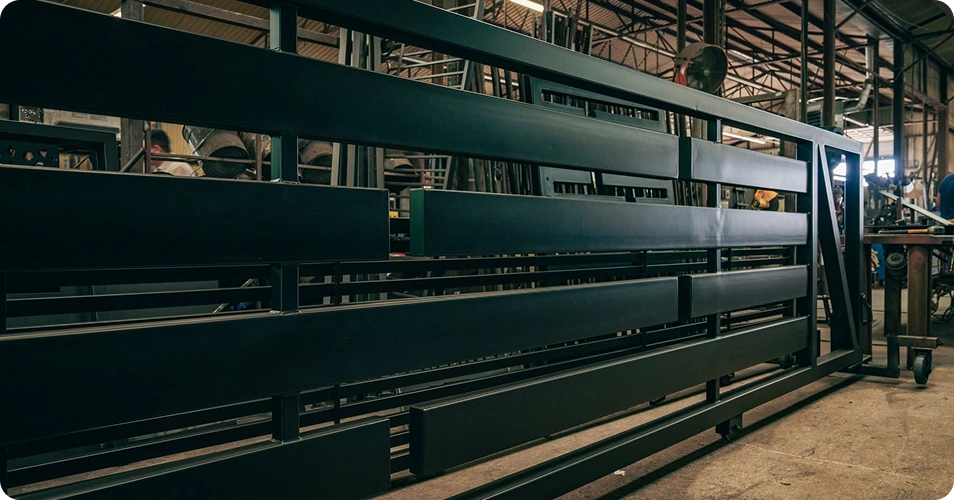
Structural Design: Posts, Foundations, Hinges, and Supports
An operator is built to move a gate, not to hold it up. If posts lean, foundations settle, hinges wear, or a sliding gate’s supports shift, the gate stops moving freely and the operator absorbs the extra load. That can show up as slowing, stalling, nuisance reversing, or early wear on the operator. When designing a new automatic gate, ask how each of these is sized and built:
- Posts and foundations: sized for the gate’s weight, width, and height, and for the soil, so they stay plumb under load.
- Hinges: rated for the gate’s weight, aligned with each other, and adjustable as the gate settles.
- Sliding gate supports: a rigid, level track or rolling support, with guides that keep the gate in line.
- Wind exposure: wide or solid-panel gates catch more wind, which adds load to the posts and the operator.
Installation Mistakes That Show Up Months Later
A Gate That Isn’t Square, Level, or Balanced
The operator can only move a gate as well as the gate moves by hand. If the leaf sags, binds on a hinge, or drags at the latch end, the motor fights it every time. Our custom driveway gates are measured to the opening and built for the property, which keeps the panel true and the load predictable. A gate that swings or slides smoothly by hand is a good sign the operator won’t be fighting it.
Safety Devices Skipped, Misaligned, or Left Untested
Entrapment protection is a required part of a safe automatic gate, not an optional upgrade. Gate operator safety standards such as UL 325 call for it. Two different problems get mixed up here:
- Misaligned, dirty, or loose sensors are an operating problem. Photo eyes that are mounted loosely or aimed at the wrong height can make a gate stop for no reason, reverse, or refuse to close, which leads to service calls.
- Missing, disabled, or incorrectly installed entrapment-protection devices are a safety risk. Without them, a gate may not stop when a person, pet, or vehicle is in its path.
Both are prevented the same way: specify the required devices in the base scope, install them correctly, and test them at handoff. Never bypass a sensor to stop nuisance stops. Fix the alignment instead.
No Tuning or Testing at Handoff
Force, speed, and stop settings need adjusting to the finished gate on its finished site. An installer who powers it up and leaves skips the step that catches many early problems. Our in-house installation team sets up trusted operator brands with clean wiring, safety devices, and smart access, then tests and tunes every system before handoff.
A Pre-Install Checklist for Your Automatic Gate
Bring these questions to any automatic gate installation quote:
- Who designs the gate and the operator together? One team should own the match.
- How are the posts, foundations, and hinges (or sliding supports) designed? They should be sized for the gate’s weight and the operator.
- Where will the operator and power run go? Who arranges the electrical power and conduit? Get the answers before concrete work.
- Who coordinates the other trades? Concrete, masonry, electrical, and landscaping should work from one plan.
- How does the site affect the design? Ask about slope, setback, and water.
- Which safety devices are included? Entrapment protection belongs in the base scope, not as an upgrade.
- What happens at handoff? Expect testing, tuning, and a walkthrough of the manual release.
- What upkeep does it need? Ask for a schedule of periodic inspections covering mechanical parts, the operator, and safety devices.
Our guide on what to expect during the custom driveway gate installation process covers how those steps fit into a project. It’s a useful companion before your first site visit.
Keeping a New Gate Reliable: Periodic Inspections
Even a well-planned gate needs periodic attention. Routine cleaning, such as rinsing with mild soap and water and clearing debris from tracks and sensors, is worthwhile but isn’t enough on its own. A routine inspection should cover:
- Mechanical components: hinges, rollers, tracks, latches, posts, and foundations, checked for wear, looseness, binding, or movement.
- Operator equipment: mounting hardware, drive components, wiring connections, enclosures, limit and force settings, and batteries on solar or backup systems.
- Safety devices: photo eyes and edge sensors checked for cleanliness, alignment, and correct function, plus a test of the manual release.
How often depends on how many times the gate cycles each day and on the manufacturer’s guidance, so ask your installer for a recommended schedule. Have a qualified technician handle repairs and adjustments, especially to the operator and safety devices.
Automatic gates rarely fail at random. At Lambert’s Ironworks, one team handles design, fabrication, operator setup, and installation in-house, so the gate, motor, and wiring are built to work together from the first sketch. We coordinate the gate and operator requirements with you and your builder, while the electrical power and conduit are typically arranged by the customer or builder through a licensed electrician.
Frequently Asked Questions
What is the best automatic gate opener for a driveway gate?
The best driveway gate opener is the one matched to your gate’s size, weight, and daily use, and to the power available on site. The gate’s posts, foundations, and hinges matter too. A strong brand on the wrong gate still struggles.
Who arranges electrical power for a new automatic gate?
The customer or builder typically arranges electrical power and conduit through a licensed electrician. Lambert’s Ironworks coordinates the gate and operator requirements, so share the operator’s power and control needs with your electrician before concrete work begins.
Why is my electric gate not working after rain?
Water often finds its way into control boxes, wiring connections, or sensors, especially where wiring was rushed or enclosures sit low. A professional check can locate the weak point.
Can you manually open an electronic gate?
Most operators include a manual release for power outages or service. Your installer should show you how it works at handoff. It’s worth testing periodically.
Why won't my automatic gate close?
A blocked, dirty, or misaligned safety sensor is a common cause, since the gate reads it as an obstruction. A gate that has started to drag can also trip the operator. Clean the sensors first, then have the alignment checked. Don’t bypass or disable a sensor to get the gate to close, since sensors are part of the gate’s entrapment protection.
Can you upgrade an existing gate instead of replacing it?
Often, yes. We run compatibility checks on existing systems and recommend upgrades to meet current safety standards, which can extend the life of a sound gate. The condition of the posts, hinges, and safety devices affects whether an upgrade makes sense.