Most driveway gate decisions start with a photo and end with a surprise: the drive rises behind the gate line, or the fence runs straight into a flower bed. You usually settle on the right gate type based on the ground, setback, and space beside the opening, well before style comes into play.
Below, you’ll see how each gate behaves on a real lot, plus a four-step check you can run with a tape measure. It draws on what our team at Lambert’s Ironworks sees on site visits across Dallas-Fort Worth, after crafting and installing more than 19,800 gates.
Sliding Gate vs. Swing Gate: What’s the Difference?
A swing gate opens on hinges in an arc, like a door, as a single leaf or a pair of leaves. A sliding gate rolls sideways along the fence line, either on a ground track (V-track) or suspended on rollers (cantilever). Swing gates need clear space in front of or behind the opening, while sliders need a long, clear run beside it. That distinction shapes nearly every other difference.
| Factor | Swing gate | Sliding gate |
|---|---|---|
| Space needed | Clear arc as deep as each leaf is wide | Clear run beside the opening, longer than the opening |
| Drive rising behind the gate | Leaves can strike the pavement | Unaffected |
| Short setback from the street | Cars may wait at the curb while it opens | Opens without entering the drive |
| Exposed, windy lot | Large solid leaves catch wind | Panel stays supported along its length |
| Main upkeep | Hinges and alignment | Track or rollers |
| Look | Formal, centered reveal | Clean, low-profile opening |
When a Swing Driveway Gate Is the Right Call
A sliding driveway gate is often the best choice for a short drive or a house close to the street. Nothing swings into the space where a car waits, and grade changes behind the gate line don’t matter.
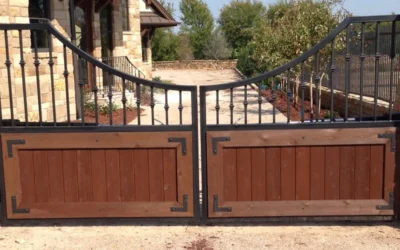
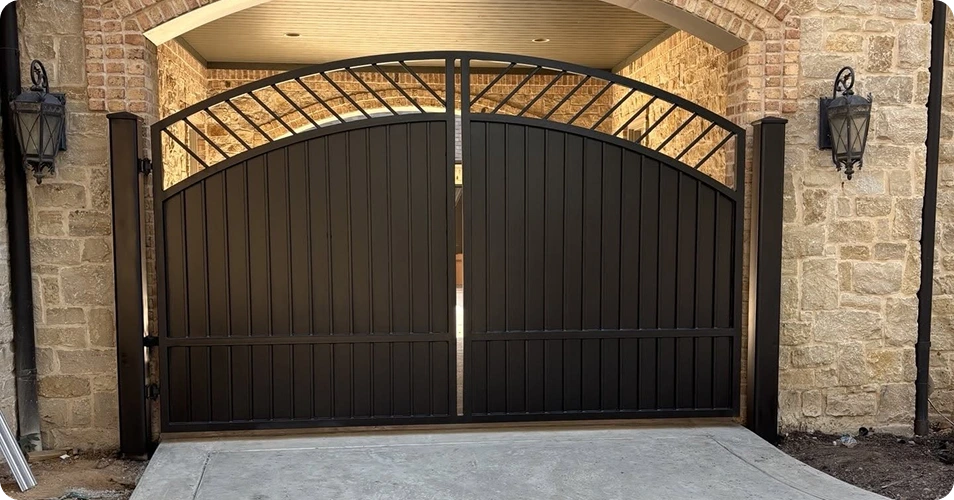
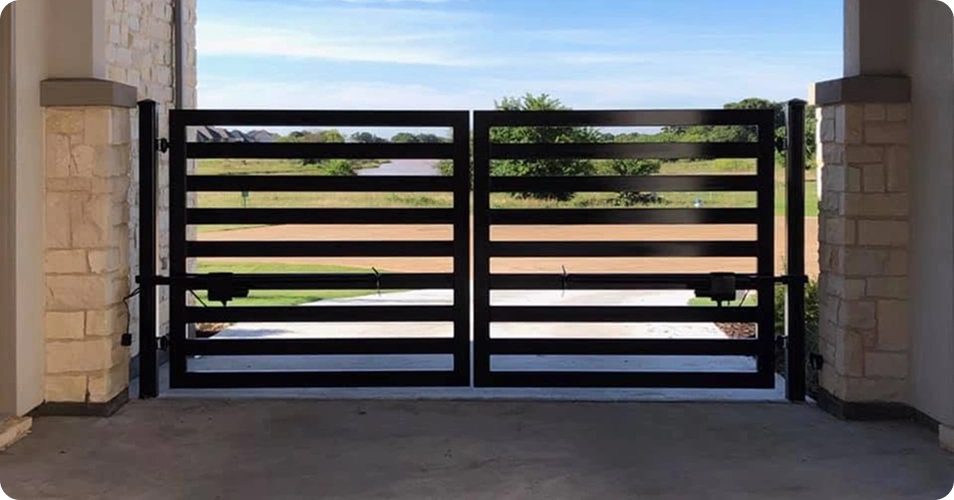
The single-versus-double choice matters more than most people expect. A 16-foot opening built as one leaf needs 16 feet of clear arc, while a dual-swing driveway gate splits it into two 8-foot leaves and halves the swing zone depth. That alone can rescue a swing design on a tighter lot.
Swing gates struggle when the drive climbs right behind the gate, when a retaining wall or landscaping sits inside the arc, or when a wide privacy design faces open wind.
When a Sliding Driveway Gate Makes More Sense
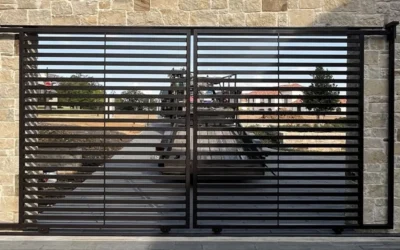
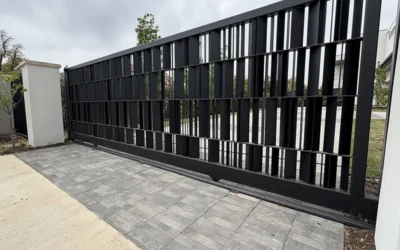
A sliding driveway gate is often the best driveway gate for a short drive or a house that sits close to the street. Nothing swings into the space where a car waits, and grade changes behind the gate line don’t matter.
The trade-off is side room: a clear stretch of fence or wall at least as long as the opening, free of trees, utility boxes, and steps.
- V-track: wheels ride a track set across the drive. It’s simpler to build, but the track must stay clear of gravel, leaves, and sprinkler runoff.
- Cantilever sliding gate: the panel hangs on post-mounted rollers and never touches the driveway, but its counterbalance section needs even more side room.
How to Choose: A Four-Step Property Check
- Measure the opening and the zone behind it. If the clear, flat depth is at least the width of one leaf, the swing stays on the table.
- Check the grade. Lay a straight board across the swing path. A drive that rises inside the arc points to a slider, usually the best driveway gate for a sloped driveway.
- Walk the fence line on both sides. No clear run as long as the opening means no slider unless the fence changes.
- Think about daily use. Weigh trips per day, wind exposure, and whether you want a formal reveal or a quieter entrance.
Picture a corner lot with a deep, flat setback: an inward double swing fits easily. In a new build where the drive climbs toward the garage, a slider often becomes the only workable option. Settling this early, as covered in our guide to planning a driveway gate during new home construction, keeps the side run and operator wiring from becoming afterthoughts. On site visits, we check these same conditions, then adjust the design or reinforce it where slopes and uneven ground call for it.
Automation and Upkeep Differences
Both styles automate well with different operators. Our certified installers set up trusted operator brands with clean wiring, safety devices, and smart access, then test and tune every system before handoff.
Swing gates need periodic hinge checks, while sliders need a clean track or rollers. For either, rinse with mild soap and water, inspect moving parts, and keep sprinklers off the steel, since constant spray weakens the finish over time.
Once you’ve measured the arc, checked the grade, and walked the fence line, the choice usually narrows to one option. At Lambert’s Ironworks, we measure every custom driveway gate to the opening and build it for the property, in single-swing, double-swing, or sliding configurations. Design details, from scrollwork to hardware, com
Frequently Asked Questions
Are sliding gates cheaper than swing gates?
Not automatically. Sliders add track or cantilever post work, while large swing gates need heavier hinges and posts. Size, design, and automation usually matter more, as our breakdown of custom driveway gate costs in Dallas explains. A site visit gives you itemized numbers for both options.
What are the common problems with sliding gates?
Most trace back to the ground. V-track gates bind when gravel or leaves collect in the track, and sprinkler spray wears them down. Cantilever designs avoid track debris but still need roller checks.
Which is more secure, a swing or sliding gate?
Both are strong barriers when built well; construction, height, and locking hardware matter more than how the gate opens.
Can a driveway gate swing outward toward the street?
Sometimes, but an outward swing can reach into a sidewalk or roadway while it opens. On a short setback, an inward double swing or a slider is usually safer.
Do I need a permit for a driveway gate in DFW?
Some Texas cities and counties require one. We check the requirements for your address and handle permitting when it applies.